ESCAP Stats Café: Death Registration: Updated Estimates, Gender Dynamics, and Country Perspectives
Death registration remains one of the least complete components of civil registration and vital statisti


The United Nations Economic and Social Commission for Asia and the Pacific (ESCAP), in collaboration with the United Nations Economic Commission for Africa (ECA), will organize the second CRVS Research Forum on 30 March - 1 April 2026 in Bangkok, Thailand.
Read More
Members and Associate Members of ESCAP have undertaken a review of their progress since the inception of the Asia Pacific CRVS Decade in 2014. Data from questionnaires distributed in 2024 to National CRVS focal points have been compiled into a Report on the 2025 Review of Progress Made on Civil Registration and Vital Statistics in Asia and the Pacific After a Decade of Getting Every One in the Picture.
Read More
The CRVS applied research training (CART) initiative focuses on enhancing CRVS systems through supporting applied research on strategies, interventions, and tools. This involves designing projects to address practical questions, employing robust methodologies, and identifying key personnel for effective implementation and publication. The need to strengthen practitioners' research capacity is evident, as highlighted in the Asia-Pacific CRVS research forum held in 2023.
Read More
To meet the targets of the CRVS Decade, a Business Process Improvement approach can help improve and streamline Civil Registration and Vital Statistics (CRVS) system. The CRVS Systems Improvement Framework help CRVS stakeholders assess, analyze and redesign, to improve user experience and produce timely vital statistics.
Read MoreThe CRVS community in Asia and the Pacific has reflected on where it stands at the midpoint of the CRVS Decade (2015-2024) during the Second Ministerial Conference. Following this celebration of progress, many of our partners and member countries are leading actions to fill the remaining gaps. To learn more about CRVS in Asia and the Pacific, please subscribe to our newsletter, which offers a monthly panorama of CRVS actions throughout the region Previous editions can be found here. |
Death registration remains one of the least complete components of civil registration and vital statisti
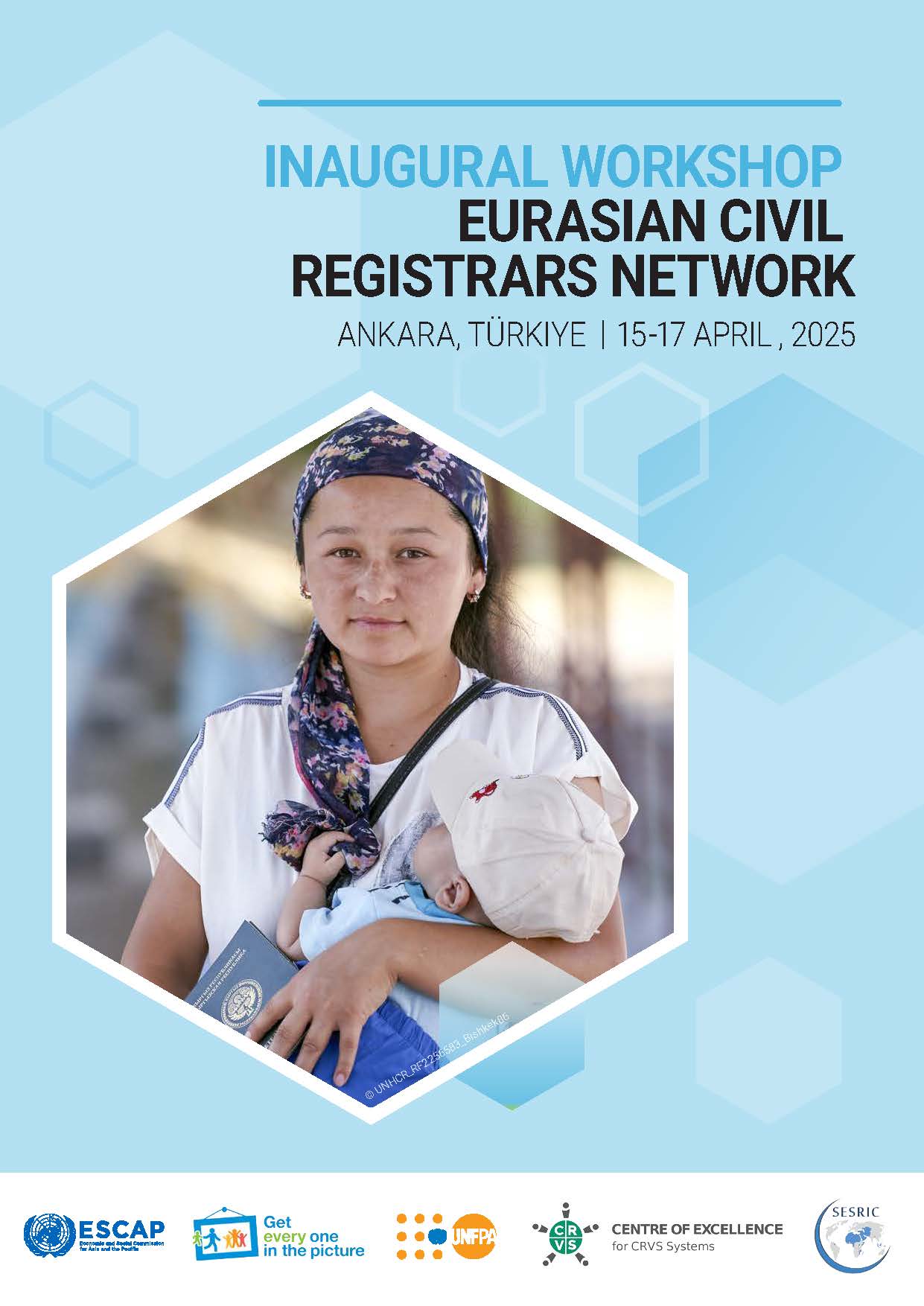
Civil registrars from Eurasian countries gathered for their inaugural meeting on 15-17 April 2025 in Ankara, Türkiye.
Our community newsletter puts a spotlight on people who have gone above and beyond in their efforts to support CRVS programmes in Asia and the Pacific, raise awareness of CRVS issues or lead CRVS improvement efforts in their home country or in the region. This month, we would like to dedicate this issue of Insight to Azizbek Ashurov.
What is your current title and role?
Brunei has taken a major step in its digital transformation agenda with the soft launch of BruneiID, a national digital identity platform designed to streamline access to public and private services. Available on major app stores, BruneiID offers secure, verifiable, and user-controlled identity management for citizens, permanent residents, and expatriates, marking a significant milestone in the country’s efforts to modernize governance and service delivery.
Fiji is undertaking its first comprehensive review of civil registration and vital statistics (CRVS) laws in five decades, aiming to modernize outdated frameworks and transition “from typewriters to tablets.” Led by the Ministry of Justice and supported by the Pacific Community (SPC) and Bloomberg Philanthropies’ Data for Health Initiative, the reform seeks to improve governance, strengthen legal identity, and ensure accurate recording of life events.
India is hosting a National Symposium and Stakeholder Consultation titled “Building a Mortality System for Viksit Bharat” in February 2026, marking a major step toward strengthening health data systems. The event aims to ensure that every death is registered, and its cause accurately determined to inform evidence-based health policies and improve governance.
Photo credit: General Department of Identification, Ministry of Interior, Cambodia
Cambodia is advancing a major initiative to strengthen its civil registration and digital identity systems, aiming to achieve the principle of “One Person, One Identity.” This effort seeks to ensure that every citizen is recognized and empowered through a secure and interoperable digital framework, laying the foundation for inclusive access to essential services.
Photo credit: UNHCR
Bangladesh is taking steps toward strengthening its civil registration system as experts highlight opportunities for reform to achieve universal coverage. While current birth and death registration rates: 50% and 47% respectively, remain below global averages, momentum is building to close these gaps and ensure every citizen has a legal identity.
In an increasingly digital world, incomplete birth records are emerging as a major barrier to identity verification and service access. Missing days or months on birth certificates, once a minor bureaucratic issue, now trigger system rejections that block individuals from healthcare, banking, education, and international travel. Millions across Asia-Pacific face this challenge due to legacy paper-based registration practices that failed to capture full birth dates.