• 2026 CRVS Research Forum

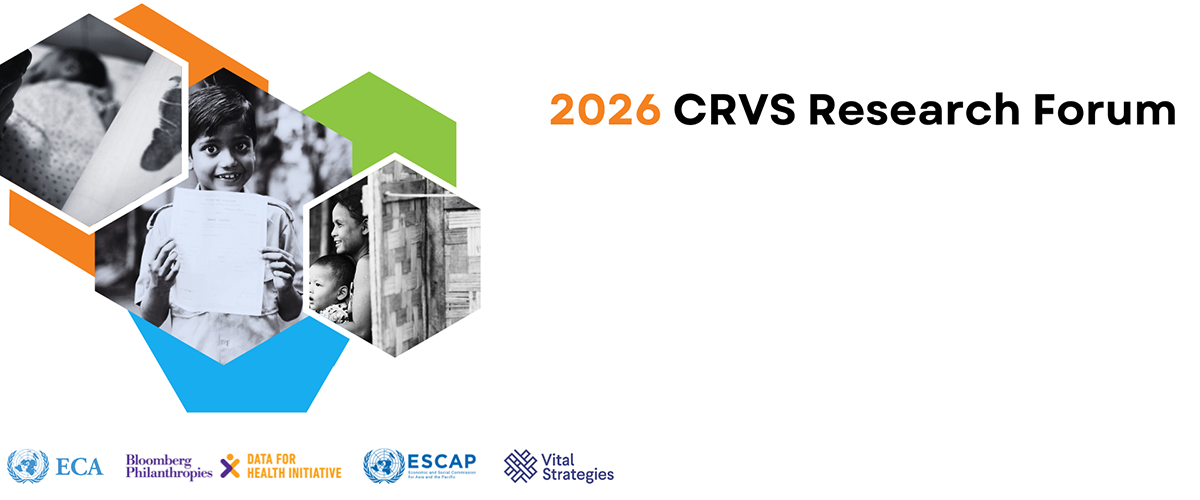
    The United Nations Economic and Social Commission for Asia and the Pacific (ESCAP), in collaboration with the United Nations Economic Commission for Africa (ECA), will organize the second CRVS Research Forum on 30 March - 1 April 2026 in Bangkok, Thailand.

    Read More
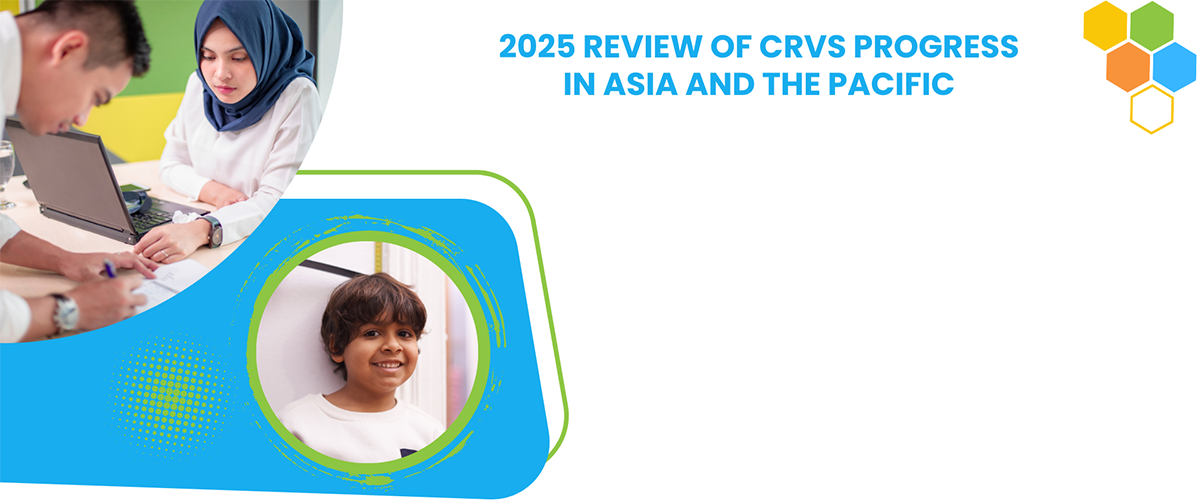
  • 2025 review of CRVS progress in Asia and the Pacific

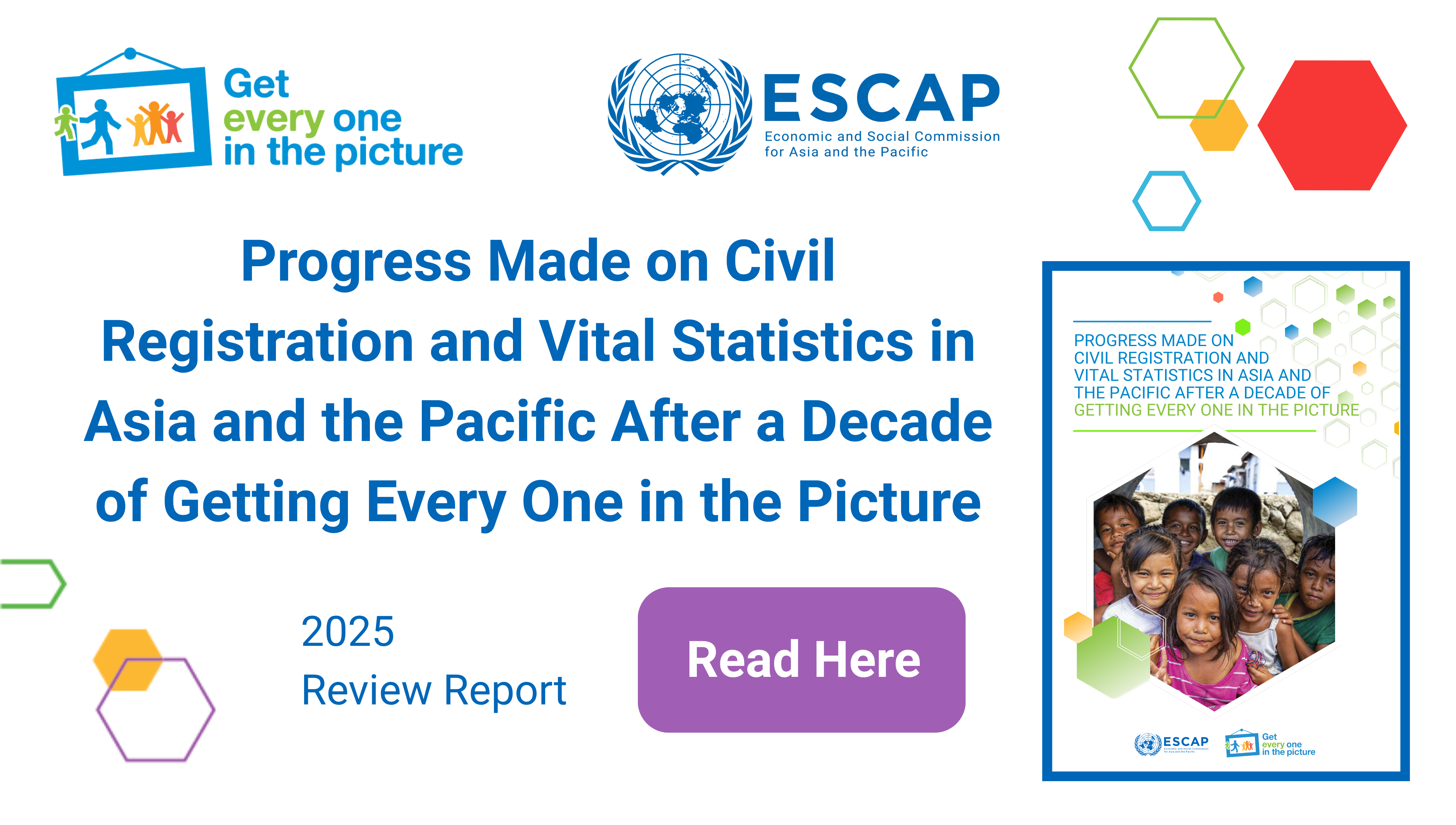
    Members and Associate Members of ESCAP have undertaken a review of their progress since the inception of the Asia Pacific CRVS Decade in 2014. Data from questionnaires distributed in 2024 to National CRVS focal points have been compiled into a Report on the 2025 Review of Progress Made on Civil Registration and Vital Statistics in Asia and the Pacific After a Decade of Getting Every One in the Picture.

    Read More
  • 2025 Civil Registration and Vital Statistics Applied Research Training Initiative

    The CRVS applied research training (CART) initiative focuses on enhancing CRVS systems through supporting applied research on strategies, interventions, and tools. This involves designing projects to address practical questions, employing robust methodologies, and identifying key personnel for effective implementation and publication. The need to strengthen practitioners' research capacity is evident, as highlighted in the Asia-Pacific CRVS research forum held in 2023. 

    Read More
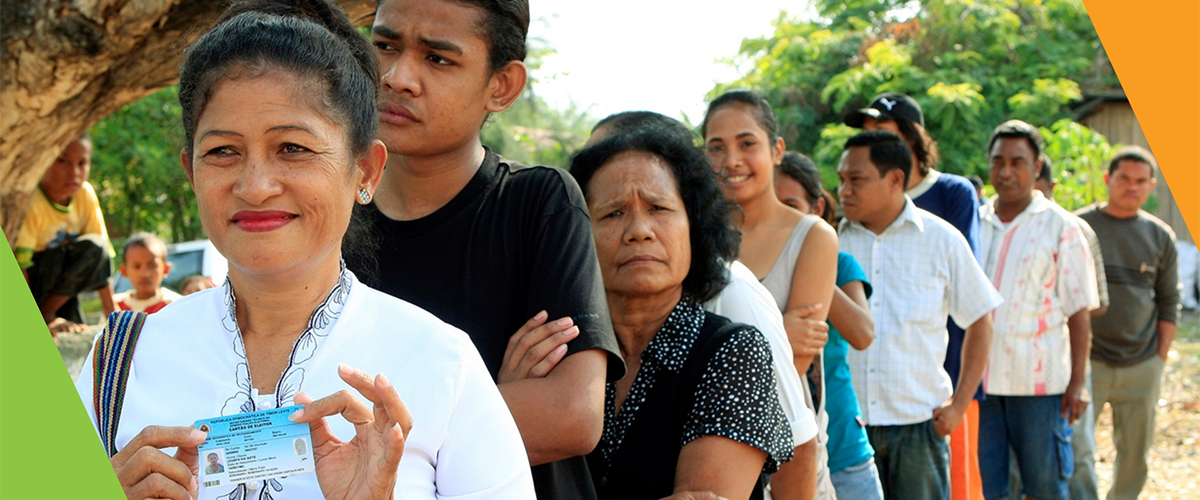
  • Civil Registration and Vital Statistics Systems Improvement Framework

    To meet the targets of the CRVS Decade, a Business Process Improvement approach can help improve and streamline Civil Registration and Vital Statistics (CRVS) system. The CRVS Systems Improvement Framework help CRVS stakeholders assess, analyze and redesign, to improve user experience and produce timely vital statistics. 

    Read More

Follow CRVS news in Asia and the Pacific by subscribing to the CRVS Insight Newsletter

The CRVS community in Asia and the Pacific has reflected on where it stands at the midpoint of the CRVS Decade (2015-2024) during the Second Ministerial Conference. Following this celebration of progress, many of our partners and member countries are leading actions to fill the remaining gaps.

To learn more about CRVS in Asia and the Pacific, please subscribe to our newsletter, which offers a monthly panorama of CRVS actions throughout the region

Previous editions can be found here.


Adjusting maternal mortality data for international comparisons: The case of vital registration systems

Register data on maternal deaths is adjusted in international reports to account for underreporting; however, there has been controversy around these adjustments. The objective of this article is to review the adjustment factors applied to maternal mortality register data. A literature review provided 72 studies on underreporting showing differences in the definition of maternal mortality. This has not previously been taken into account when calculating average adjustment factors.
China: Evaluation of the Completeness of Birth Registration in China Using Analytical Methods and Multiple Sources of Data

Births are registered and birth data are collected in China by different government departments, and the completeness and quality of birth data are heavily affected by the one-child policy irrespective of the involving departments. In this paper, data from population census, primary school enrollment and household registration system are used to assess the completeness of birth registration in China by employing three types of methods—linear regression, Brass /PF ratio method, and Preston integrated approach. The three types of estimation derived from multiple data are highly consistent.

P20 Initiative: Baseline report

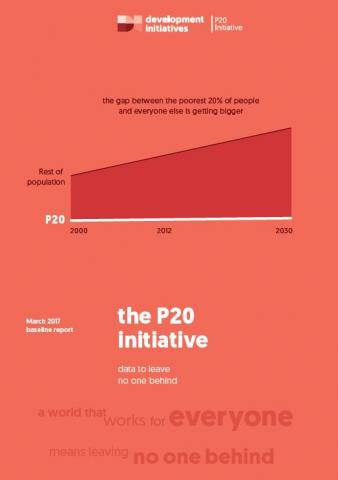
In 2015, world leaders agreed the 2030 Agenda for Sustainable Development (Agenda 2030). Its goal is to end poverty in all its forms everywhere, with a specific target to eradicate extreme poverty by 2030 and a commitment to leave no one behind. Achieving these ambitions will be much harder than meeting the Millennium Development Goals. It will require a different mindset, and new ways of measuring and monitoring progress.

Consultation on Draft Policy for Data Use and Data Sharing

As healthcare challenges continue to mount worldwide, effective data use and sharing is imperative. In support of health information sharing as a public good, WHO and it’s Director-General’s office is working to finalize a Policy on Use and Sharing of Data Collected in Member States by the WHO Outside the Context of Public Health Emergencies. The document sets out a systematic and comprehensive approach to data use and data sharing.

Events

News

Resources