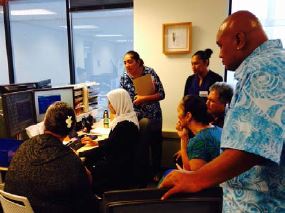

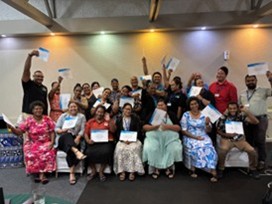
The Pacific Community (SPC), with support from Vital Strategies’ Global Grants Program (GGP), ESCAP and the Bloomberg Philanthropies Data for Health Initiative ran a three-day regional workshop for participants from Fiji, Samoa, Solomon Islands, Kiribati, Niue, and Tonga from 3-5 March in Nadi, Fiji. During this workshop, participants worked to enhance capacity in gender-responsive data analysis and evidence-based policy making on a range of topics from gender disparities in birth and death registration to reproductive health needs.
SPC is also providing technical support to Samoa, Tonga and Niue for implementation of their national GGP grants which focus on a range of in-country CRVS Strengthening activities to facilitate the analysis of gender inequities. Country-level support through Vital Strategies’ GGP program in these three countries will include activities such as the digitization of paper-based registration records to facilitate the analysis of cause of death data to assess gender inequities in health outcomes and integration of gender mainstreaming across the data lifecycle, from collection to analysis and reporting. To find out more about this workshop and access related materials, visit the SPC website.
As part of Fiji’s national GGP project to assess gender inequities in birth registration by geographic location, a workshop was organized by Fiji Bureau of Statistics (FBoS) and the Ministry of Justice (MoJ), in collaboration with UNSW and ESCAP from 18-19 March in Suva, Fiji.
The workshop focused on the standardization of geographic variables in the national birth registration database (place of birth & place of birth registration), which has previously hindered the analysis of birth registration completeness at sub-national levels. Now that these variables have been standardized, sub-national analysis of gender inequities in on-time birth registration has been made possible and will inform further qualitative work in remote and hard-to-reach areas of Fiji to discern the barriers and obstacles faced by families to register the birth of their child within one year of occurrence. Attended by a range of stakeholders from relevant ministries and agencies engaged in the national CRVS system, the workshop also benefitted from the valuable insights provided by divisional registrars from the more remote divisions of Fiji. The findings from quantitative and qualitative analysis will further inform the design of targeted interventions, aimed at improving on-time birth registration in Fiji and reducing gender inequities. Find out more here.