On 19 September 2017 in New York, the International Labour Organization launched two seminal reports: Global Estimates for Child Labour: Results and Trends, 2012 – 2016 and Global Estimates of Modern Slavery: Forced Labour and Forced Marriage. Following the multi-year, collaborative research project conducted with Alliance 8.7 Members, the Walk Free Foundation and the International Organization for Migration, the reports reveal what the ILO deems the “true scale of modern slavery around the world”. Notably, the Child Labour report highlights the importance of birth registration, specifically as it pertains to building a policy response to child labour for the road forward.
First, the report emphasizes that, “Free and compulsory education of good quality up to the minimum age for admission to employment is a key tool in ending child labour”, but also notes that the cost to the family is one of the primary barriers preventing educational access for children. In response, the report stresses the need for investment in child education and singles out the link between cash transfers, non-means-tested benefits, and birth registration as a viable method for offsetting “the indirect cost of children’s time in school”.
Second, the report acknowledges poverty, risks, and shocks to the family as the primary drivers behind child labour and says that “social security is critical to mitigating these vulnerabilities”. After emphasizing public employment programmes, health protections, unemployment protections, and basic income security as the basis for a well-designed social security system, the report ultimately concludes that “Birth registration, itself a key human right, is an essential starting point for ensuring coverage in all of these areas”.
News & Events

19 Sep 2017
ILO highlights the importance of birth registration for social protection

More News
28 October 2025
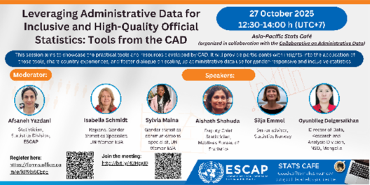
The Economic and Social Commission for Asia and the Pacific (ESCAP) is hosting the next Stats Café…
28 October 2025
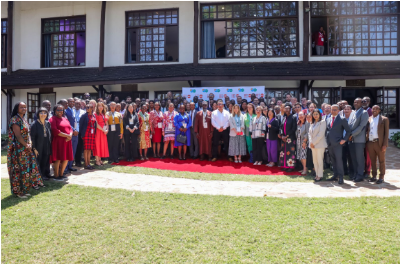
UNFPA and its Centre of Excellence for CRVS Systems, in collaboration with IDRC, Canada, the Global…
28 October 2025
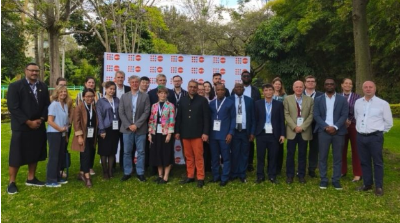
As governments digitize civil registration, identity management, and data systems, the need for…
28 October 2025
There are only 2 weeks left to apply for the third cohort of the CRVS Applied Research Training!…

15 October 2025
Bloomberg Global Grants Program Launches New Funding RoundCART applications now openNew members of…

25 September 2025
The European Committee for Standardisation (CEN) Working Group 19 (CEN/TC 224/WG 19) is working on…
25 September 2025
Unique identifiers are a key tool for countries aiming to build more resilient and inclusive…
25 September 2025
At the Third Ministerial Conference on Civil Registration and Vital Statistics (CRVS) in Asia and…

25 September 2025
The CRVS Applied Research Training (CART) initiative is a one-year capacity-building programme…
25 September 2025
A pilot initiative by Cambodia's General Department for Identification, Vital Strategies, Plan…