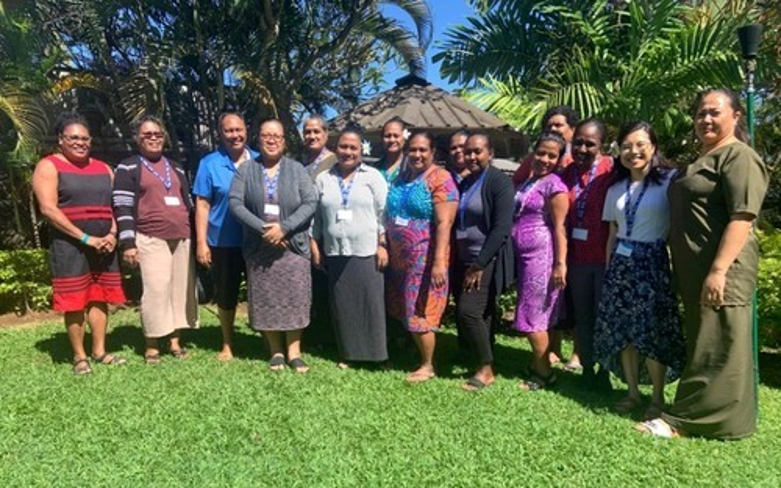


Our community newsletter puts a spotlight on people who have gone above and beyond in their efforts to support CRVS programmes in Asia and the Pacific, raise awareness of CRVS issues or lead CRVS improvement efforts in their home country or in the region. This month, we would like to dedicate this issue of Insight to Jin Shan.
What is your current title and role?
I currently serve as a Statistician at the Shanghai Municipal Center for Disease Control and Prevention. My primary responsibilities include the statistics, management, and analysis of vital registration data, ensuring the accuracy, timeliness, and completeness of birth registration data. Additionally, I am committed to promoting the integration of registration data with public health practices, providing evidence-based support for regional population health management and decision-making.
How did I get involved in CRVS-related research?
I have long conducted research centered on CRVS data, with a focus on the impact of climate change on urban population health. Relevant research findings have been published in academic journals such as Urban Climate and Ecological Indicator. As a member of the 2024-2025 CART programme, I developed the research framework for "Global Warming and Health: The Impact of Heat Waves on Years of Life Lost in Shanghai", which was subsequently published in Environmental Research. Currently, I continue to deepen the application of CRVS data, conducting public health research on the effects of environmental factors such as extreme temperatures and air pollution on neonatal health.
Recent CRVS-Related Research Project and Findings
My recent core CRVS-related research is a neighborhood-scale study on the health impacts of heatwaves in Shanghai, published in Environmental Research (October 2025) and serving as a key outcome of my participation in the 2024-2025 CART programme. This study fills the gap in understanding the dynamic changes of heatwave-related health burdens at a fine spatial scale. Methodologically, it integrates CRVS death registration data, meteorological data, and remote sensing data from two time periods (spanning a decade) across 211 neighborhoods in Shanghai. Using distributed lag nonlinear models (DLNM) and multivariate meta-analysis, we accurately quantified the association between heatwaves and Years of Life Lost (YLL) rates.
Key findings include:
- A significant reduction in heatwave-related health burdens over the decade: YLL per death decreased from 1.00 years (95% CI: 0.85-1.15) to 0.19 years (95% CI: 0.06-0.32), and annual excess deaths (ED) dropped from 327 cases (95% CI: 277-380) to 62 cases (95% CI: 58-66), with a noticeable shortening of heatwave lag effects.
- Persistent high-risk groups: Adults aged 65 and above and populations with low educational attainment remained highly vulnerable to excess mortality. Notably, the YLL burden shifted from males to females.
- Higher vulnerability among cardiovascular disease (CVD) patients: CVD-related YLL remained consistently higher than that of total non-accidental deaths (TND) across both periods.
For Shanghai, this study provides data-driven support for differentiated heatwave protection strategies. It also offers a replicable framework for applying CRVS data in other Chinese cities and serves as robust empirical evidence for similar aging cities worldwide addressing climate-related public health challenges.
Which advice would you give to others wanting to do similar research?
For those interested in CRVS-related research, I have three suggestions:
- Prioritize data quality: The reliability of CRVS research depends on the completeness and accuracy of the data. It is essential to establish a robust system for data standardization and quality verification early in the research process.
- Align with practical needs: Define research directions based on real-world scenarios such as public health practice and population management decision-making to facilitate the translation of data into policies.
- Embrace interdisciplinary integration: CRVS research requires integrating knowledge from multiple fields, including registration management, statistical analysis, environmental science, and public health. Proactively adopt interdisciplinary research methods and technical tools to enhance the depth and breadth of your work.