

Photo credit: UNFPA / Asad Zaidi
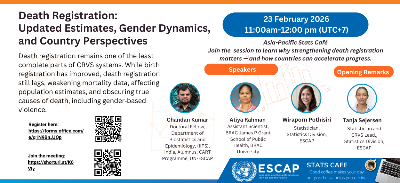
As the annual 16 Days of Activism against Gender-Based Violence (GBV) conclude, experts are highlighting a critical but often overlooked tool in combating violence: universal and robust death registration. Countless women and girls across Asia and the Pacific lack formal recognition, extending even to the documentation of their deaths. This undermines efforts to design effective policies and interventions. Without accurate mortality data, gender-related killings and harmful practices remain hidden from view, perpetuating cycles of violence.
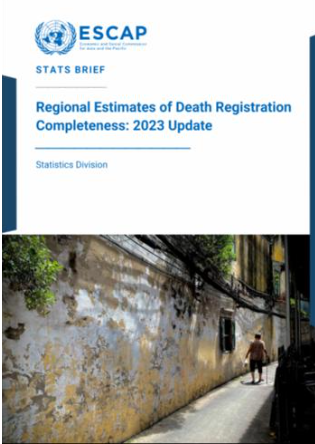
Current estimates suggest that 6.9 million deaths go unregistered annually in the region, with women disproportionately represented among the uncounted. This gap stems from systemic and social factors, including limited incentives for families to register female deaths, particularly where women lack property rights. Location also plays an important role. Women are more likely to die at home or outside health facilities, especially in rural areas where registration systems are weakest. Even when deaths are recorded, misclassification is common. Cases labeled as “natural” or “accidental” or “unknown” often mask gender-based violence. Studies reveal that many deaths initially classified as suicides or accidents were, in fact, linked to GBV.
The consequences are critical. In 2024 alone, an estimated 17,700 women in Asia and the Pacific were killed by intimate partners or family members, yet many of these deaths were not officially counted as femicide due to inadequate data standards. This failure to capture female mortality accurately not only obscures the scale of violence but also hinders accountability and prevention efforts.
International experts, including ESCAP and UNFPA, are calling for urgent action to close this gap. Priorities include ensuring complete and timely death registration, adopting the Statistical Framework for Measuring the Gender-Related Killing of Women and Girls, and strengthening medico-legal capacity to accurately determine cause and manner of death. Countries such as Fiji and Mongolia have already piloted these frameworks, signaling progress toward global standards. Experts stress that improving female death registration is not merely a technical exercise, it is a human rights imperative and a prerequisite for achieving Sustainable Development Goal Target 5.2 on eliminating violence against women and girls.
Read the full blog here.