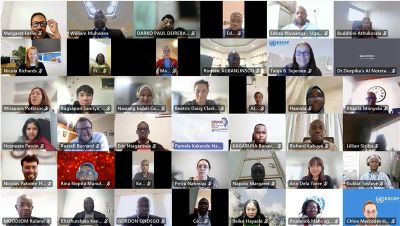

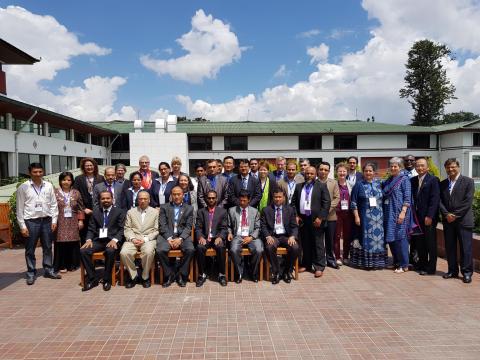
The first meeting of the Civil Registration Professionals of South Asia (CR8) took place between 24 - 25 July in Kathmandu, Nepal. Co-organized by the United Nations Children’s Fund Regional Office for South Asia (UNICEF-ROSA) and the United Nations Economic and Social Commission for Asia-Pacific (ESCAP), the meeting brought together 22 experts from Afghanistan, Bangladesh, Bhutan, Maldives, Nepal, Pakistan and Sri Lanka to review areas of common interest, build bridges for future collaboration and share ideas for approaching complex CRVS issues. Most importantly, the meeting was also designed to "consider the creation of an informal network of professionals who work in civil registration in the eight South Asian countries".
The meeting also discussed three common areas of concern in all countries in South Asia — national coordination, cross-border collaboration, and the relationship between civil registration and civil identification. The participants recognized that the interdependent nature of civil registration demands systematic and active coordination between the civil registration office and ministries and departments that directly or indirectly support or benefit from the system. Cross-border collaboration is also required to ensure universal registration. Collaboration presents challenges, including to data security, and often requires adjustments to legal frameworks. However, the benefits of cross-border collaboration in terms of protecting human rights and delivering better services to resident and migrant populations fully justify efforts to overcome such challenges.
With the need for a secure and efficient identification management system, the meeting discussed the relationship between, and uniqueness of, civil registration and civil identification systems. Both are primary registers as they provide the institutional anchoring for the verification and authentication of identities through the identity credentials they issue. Contrary to civil identification systems, civil registration systems are considered foundational as well as primary as they are needed to establish and maintain any other type of identification management system.
As a result, a compendium of three papers was created to reflect the thought processes and discussions from the meeting. This publication includes the three background papers that formed the basis for the discussion during the meeting, as well as the meeting conclusions and recommendations.